
Germany’s Minister for Economic Affairs, Katherina Reiche (CDU), recently unveiled (19 October 2026) a ten-point package aimed at accelerating the development of the hydrogen market. Beginning in 2027, the German Federal Ministry for Economic Affairs will allocate at least €1.5 billion to support industry’s transition to hydrogen use. The funding will be available both for hydrogen produced through electrolysis and for low-carbon hydrogen derived from natural gas.
The ministry led by Reiche also plans to support gas-fired power plants that will be converted to operate on hydrogen from 2040 or 2043 onwards. The first tenders, covering two gigawatts of generating capacity, are scheduled for 2027, with the plants required to run on hydrogen from 2040. A further two gigawatts are expected to be tendered between 2030 and 2032, with conversion to hydrogen operation planned by 2043.
Germany intends to use hydrogen-fired power plants, among other purposes, to provide balancing and backup power. The share of renewable energy in Germany’s electricity generation continues to increase and is expected to reach 80 percent of electricity consumption by 2030. Alongside wind and solar power, dispatchable generation capacity will be needed to ensure security of supply.
Under EU definitions, low-carbon hydrogen must generate at least 70 percent fewer greenhouse gas emissions than a fossil-based benchmark. This category includes hydrogen produced from natural gas with carbon capture and storage (CCS). Emissions calculations also account for methane leakage during production and transportation.
New Carbon Contracts for Difference
The centerpiece of the new support package is a new round of Carbon Contracts for Difference (CCfDs). Under these contracts, the German government compensates companies for up to 15 years for the additional costs associated with adopting low-emission technologies.
In the 2027 funding round, at least €1.5 billion will be earmarked for hydrogen projects. If demand proves strong, the federal government may increase the available budget.
In the current CCfD scheme, all technologies compete for the same pool of funding. For the 2026 application round, the ministry will award support solely on the basis of cost-effectiveness. In practice, projects that achieve the greatest emissions reductions per euro of public funding will receive priority.
Applicants relying on natural gas or biomass must demonstrate that direct electrification is not technically feasible. Hydrogen projects, however, will not be required to provide such evidence.
Creating markets for green steel
To stimulate demand, the ministry also plans to create stronger markets for climate-friendly steel. Future offshore wind tenders will include the carbon footprint of project components as a selection criterion. Since more than two-thirds of a wind turbine consists of steel, significant emissions reductions can be achieved through the use of hydrogen-based steelmaking.
The German government also aims to introduce similar requirements for public procurement of steel and cement.
Expanding hydrogen infrastructure
Infrastructure expansion and imports form another key pillar of the strategy. According to the ministry, more than 500 kilometers of the national hydrogen backbone network had already entered operation by 2025, while an additional 2,200 kilometers were under construction. The federal government and Germany’s states plan to provide a combined €4.2 billion for network development in the coming years.
Germany is also promoting hydrogen imports both through European pipeline connections and by ship from global suppliers. Low-carbon hydrogen imports will be included alongside renewable hydrogen.
A more flexible regulatory framework
According to Reiche, Germany also needs investment-friendly regulation that lowers costs and accelerates market development. The Ministry for Economic Affairs argues that overly stringent European requirements are a major cost driver during the market ramp-up phase. Germany therefore intends to advocate for a more pragmatic EU regulatory framework.
This is particularly relevant as the European Commission prepares revisions to the Renewable Fuels of Non-Biological Origin (RFNBO) rules.
A Model Inspired by Kotka
At Hycamite, we view these developments positively. Hydrogen technologies can be effectively combined with natural gas to provide low-carbon balancing power. Our most recent project in Kotka, Finland, offers a strong example of this approach.
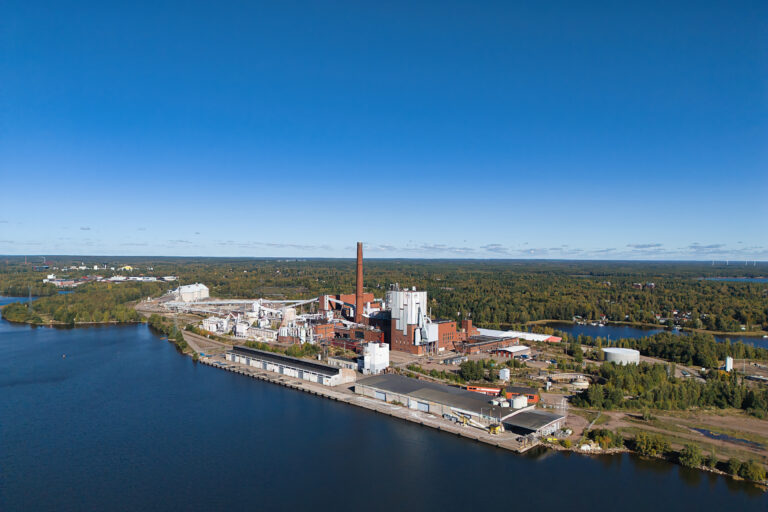
GEN-H Energy, which is developing an energy and technology hub at the former Sunila pulp mill site, is planning a 200-300 MW balancing power project in Kotka. The facility is designed to generate electricity from natural gas without carbon dioxide emissions. In this project, Hycamite’s technology converts natural gas into low-carbon energy without producing CO₂ emissions either during methane decomposition or subsequent power generation.
GEN-H Energy and Hycamite are jointly exploring a gas turbine power plant integrated with Hycamite’s methane-splitting technology. The concept combines methane decomposition units directly with electricity-generating gas turbines. The companies have already signed a Memorandum of Understanding (MoU) to advance the project.