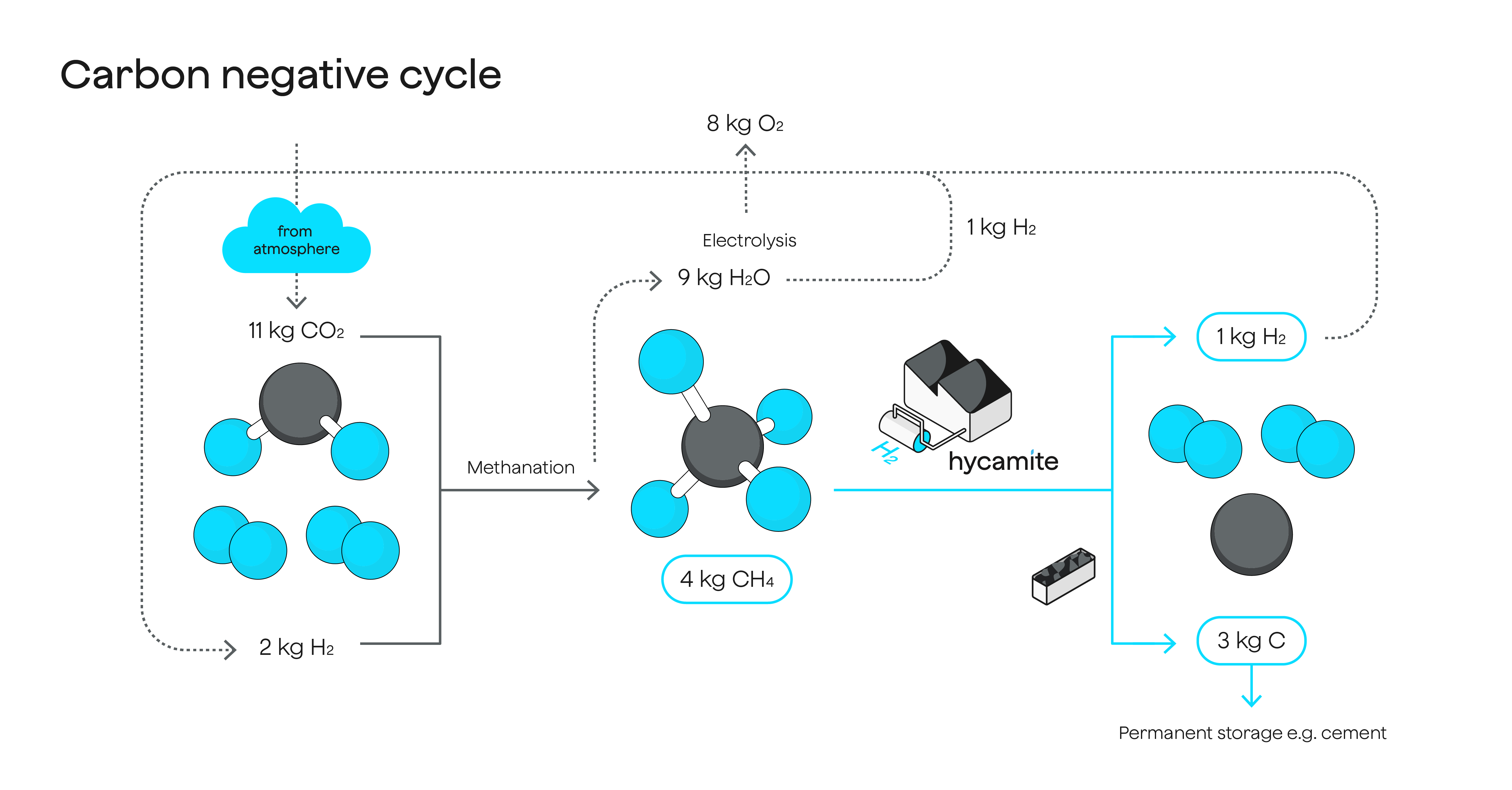
Hycamite has developed a process that splits methane into hydrogen and solid carbon using heat and proprietary, recyclable catalysts. Several catalyst families, all developed by Hycamite, lower the required process temperature and shape the structure of the solid carbon. The scientific groundwork comes from more than 20 years of research at the University of Oulu, Finland.
Because the carbon is captured in solid form, no carbon dioxide capture or storage is needed. Hycamite is developing the refining of solid carbon into synthetic graphite and is preparing a carbon refinery in Kokkola for that purpose. The target for the battery-grade graphite is a carbon footprint below 2.5 kg CO₂e per kilogram.
Hycamite’s graphite production is recognised by the European Commission as a Strategic Project under the EU Critical Raw Materials Act. The graphite is suitable for direct use or further refinement, depending on battery manufacturer needs.
Less energy, less electricity
The process needs about one eighth of the electricity that water electrolysis needs per kilogram of hydrogen. By utilizing novel Hycamite catalysts, we significantly reduce the required process temperature and, thus, the amount of energy used. The total energy needed is 6 to 10 kWh/kg H₂, of which a considerable part can be heat. This is very low compared to electrolysis, which uses approximately 50 to 55 kWh/kg H₂.
More than half of the energy it uses is heat, not electricity. This lowers exposure to electricity prices and allows customers’ waste heat to be used in hydrogen production.
50+
New Hycamite methane-splitting plants by 2030
No carbon dioxide from the reaction
The HYCAMITE™ process is oxygen-free. The carbon is collected in solid form immediately after the methane molecule is split, and without oxygen no carbon dioxide can form in the reaction.
The independent German energy research institute FfE assessed the life-cycle carbon footprint of the process at below 1 kg CO₂e/kg H₂ in Finland. Steam methane reforming produces hydrogen at 9 to 20 kg CO₂e/kg H₂. When sustainable biomethane is used and the solid carbon is stored permanently in products, the process can create a carbon sink.
Our method is sometimes called turquoise hydrogen. We prefer to state carbon intensity, because the colour labels have no agreed definitions and do not track actual life-cycle emissions.
Methane as feedstock
Methane is widely available, easy to store and transport, and it moves through infrastructure that already exists. The process accepts natural gas, biomethane, synthetic methane and petrochemical by-product gases. Because the upstream emissions of the feedstock determine a large part of the final carbon footprint, Hycamite prioritises low-emission suppliers.
Plants can be located next to customers, so hydrogen does not need to be transported. Feedstock arrives through existing gas pipelines and is processed on site.